














An exhibition on the occasion of the new building project and the 60th anniversary of the Haus am Lützowplatz association.
curated by Asja Wolf
Architecture shapes our lives. It provides shelter, creates identity, and influences our perception. It is a stage for human interaction and a scale against which individuals can reflect on the self. It invisibly records everything that happens within its walls. It retains the good and the incomprehensible in equal measure.
When architecture becomes a space for art, a multi-layered process of exchange is set in motion. Works of art that emerge from thinking about the world encounter specific ideas about functional proportions, materiality, and design. When historical architecture becomes a space for art, it is almost impossible to separate the content of the exhibited works from the history and narrative of their surroundings. The architecture takes on a meaning that goes beyond its spatial function.
In 2024, the Haus am Lützowplatz (HaL) association will embark on the construction of a new building that will add an architectural contrast to the historic exhibition house and complete a city planning project that was conceived as part of the 1987 International Building Exhibition in Berlin. Based on a design by Berlin architect Edgar Döwe, a point block will be built behind the HaL garden, which will not only serve as housing for artists and provide new exhibition spaces, but will also remedy a long-neglected situation in urban space. The exhibition “Architecture and Morality”, conceived for this occasion, presents the new building project while simultaneously looking back at the beginnings of the institution.
The conceptual pairing of “architecture and morality” describes the tension between the plans, documents, and interventions on display and the historical foundation and architectural perspective of HaL. In 1977, the English architectural theorist David Watkin published the book “Morality and Architecture”, which contributed to what was at the time a heated debate in Germany about the urban and social significance of historicist architecture. A short time later, the English New Wave band “Orchestral Manoeuvres in the Dark” (OMD) took up this title and released the highly acclaimed album “Architecture & Morality” in 1981. Here, the band members allude to what they perceive as the architectural soundscapes of their new electronic instruments and draw a connection to what they understand as “morality”: the organic, the human, and the emotional.
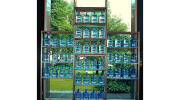
The title of the exhibition recalls this discourse on the manifestations of architecture and the moral dimension inscribed in it. Based on a work by the Israeli artist Ariane Littman exploring the incomprehensible past of Haus am Lützowplatz, “Architecture & Morality” traces the history of the building at Lützowplatz 9, which was constructed in 1873 in the style of a neoclassical city villa and only became an exhibition venue in 1940 through the injustices perpetrated by the Nazis.
Beginning in 1959, a group led by the SPD politician and then Governing Mayor of Berlin Willy Brandt campaigned to develop the building under new ownership into a platform for contemporary art with a liberal orientation. This ambition will continue to shape HaL in the future.